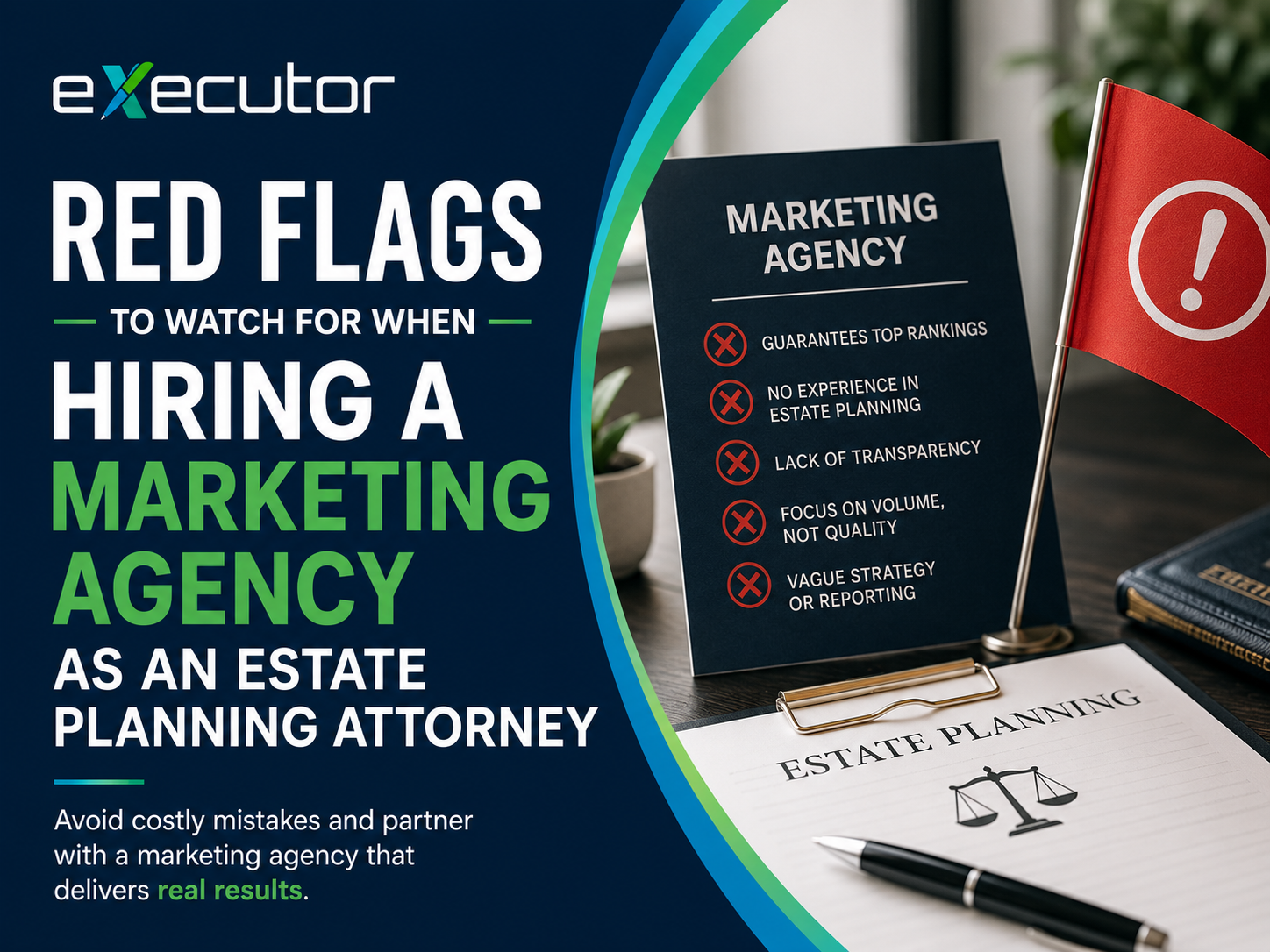
Red Flags to Watch for When Hiring a Marketing Agency as an Estate Planning Attorney
You’ve probably been pitched by a marketing agency before. Maybe more than once. And if you hired one, there’s a decent chance it didn’t go the way you hoped — vague reports, generic content that could’ve been written for a dentist or a divorce lawyer, and a retainer that kept renewing while the phone stayed quiet.
You’re not alone. And it’s not because you made a bad decision. It’s because the agencies you talked to didn’t actually know your practice.
Here’s what to watch for next time.
The Problem
Most marketing agencies don’t specialize. They say they do — they’ll happily add “law firms” to their list of served industries — but there’s a meaningful difference between an agency that has worked with a few attorneys and one that lives inside the world of estate planning every single day.
That difference shows up in everything: how they talk about your work, whether they understand the trust-building cycle your prospects go through, and whether their content actually resonates with people who are already anxious about what happens to their family after they’re gone.
Why It Happens
Most attorneys are busy and, understandably, a little desperate for the marketing problem to just be solved. So when an agency shows up with a polished deck, good testimonials, and confident answers to every question, it feels like enough.
The agency looks credible. They know what SEO is. They have case studies.
The problem is that credibility in the abstract isn’t the same as expertise in your specific corner of the law. And by the time that gap becomes obvious, you’re several months and several thousand dollars in.
The Red Flags: What to Watch For
1. They don’t ask about your client journey before they pitch you.
Before any agency should be talking about tactics — blog posts, ads, email campaigns — they should want to understand how a client goes from “I’ve been thinking I should get a trust” to sitting across from you. If they skip that conversation and go straight to deliverables, that’s a problem.
2. Their content samples read as if they could be for anyone.
Ask to see actual work they’ve done for estate planning attorneys, not just legal clients in general. Then read it. Does it sound like someone who understands the emotional weight of this work? Does it reflect the vocabulary your clients actually use? Generic legal content is easy to produce. Content that earns the trust of someone deciding who to entrust with their legacy planning is harder to create.
3. They measure success in traffic instead of conversions.
An agency that leads with “we’ll grow your organic traffic by 40%” is not necessarily wrong — traffic matters — but it’s not the number that pays your rent. Ask specifically how they define success and how they connect their work to new client inquiries or consultations booked.
4. They can’t name a competitor in your market.
If an agency is going to help you stand out, they need to know what you’re standing out from. A specialist should be able to talk intelligently about how other estate planning attorneys in your area are positioning themselves. If they’re vague or generic here, they haven’t done the homework.
5. The contract is long, and the exit is complicated.
This one isn’t about expertise — it’s about trust. An agency that’s confident in its work doesn’t need to trap you in a 12-month contract with penalties. Month-to-month or 90-day engagements are more common with agencies that actually perform.
A Scenario Worth Considering
Imagine two estate planning attorneys in the same mid-sized city. Both hire agencies in the same month. Attorney A hires a generalist firm with an impressive website. Attorney B hires a firm that specializes in estate planning.
Six months later, Attorney A has a refreshed website and some blog posts about “the importance of estate planning.” Attorney B has a content library built around the specific fears and questions their actual clients bring to consultations — and a steady stream of referrals from people who found them through Google by searching exactly those questions.
The difference isn’t the budget. It’s specificity.
The Short Version
Hiring an agency that doesn’t specialize in estate planning isn’t just inefficient — it’s a bit like hiring a general practice attorney to handle complex trust litigation. The skill sets overlap, but the expertise that actually matters doesn’t.
Before you sign anything, ask hard questions. Demand relevant samples. And if their pitch is heavier on promises than on demonstrated knowledge of your specific practice area, trust that instinct.